
Why McLuhan Matters V. Surviving the Digital Maelstrom
If media work as environments, what can we actually do about their power?

McLuhan: “Sailor saved himself by studying the action of the whirlpool and by co-operating with it.”An excerpt from an essay in the new Canadian journal “2067”; read the full essay here.
McLuhan was perhaps the first to recognize that media are not just tools or technologies we create and use; media themselves create environments to which we must adapt. He wrote: “Any new technology, any extension or amplification of human faculties when given material embodiment, tends to create a new environment. This is as true of clothing as of speech, or script, or wheel.”
“Any understanding of social and cultural change is impossible without knowledge of the way media work as environments,” wrote McLuhan in 1967. His environmental perspective on media helped his fellow media theorist Neil Postman introduce media ecology as a new discipline in 1968. McLuhan and Postman are the two founding figures of media ecology. While other communication theories study what humans do with media, media ecology explores what media do to humans.
If media act as environments, what can we actually do about their power? The Persian king Xerxes ordered his soldiers to lash the sea when a storm destroyed his pontoon bridge, but the sea remained indifferent. At least Xerxes made it into history: the modern prosecutors of the mediatic seas may not even have that. As soon as you see media as environments, you become more circumspect about controlling them.

Personal withdrawal is no escape from media’s environmental force. When an opponent in a debate argued that he was not affected by television because he did not have a TV, McLuhan responded: “You merely suffer the consequences of TV without enjoying it.” You may not use smartphones, social media, or AI, but make no mistake: you are still affected by them.
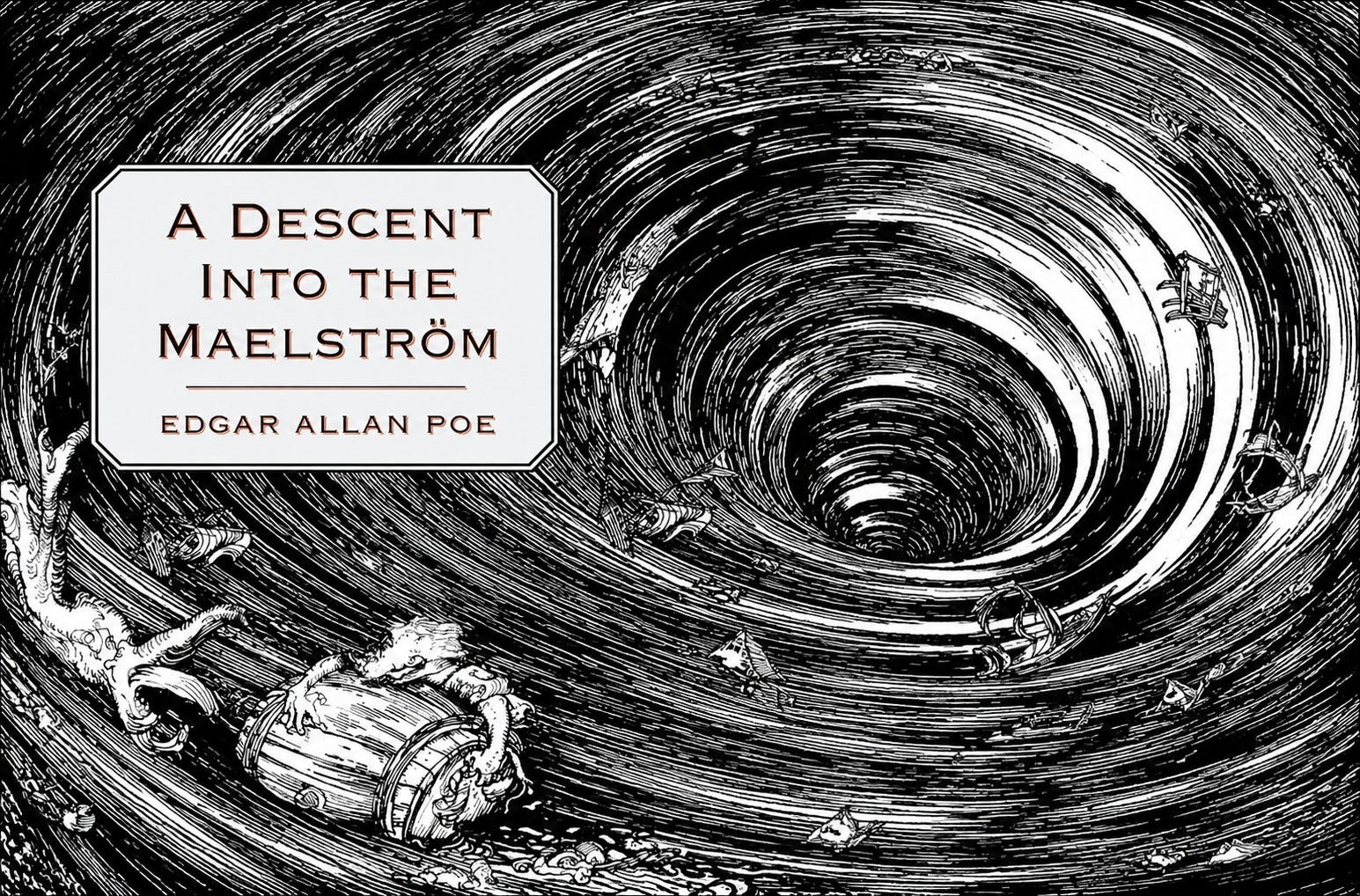
McLuhan gave us a clue to what we can call environmental media literacy, as opposed to instrumental media literacy. In The Mechanical Bride (1951), he offered a metaphor for escape from a deadly environment, borrowed from Edgar Allan Poe’s short story “A Descent into the Maelstrom” (1841). In Poe’s tale, a fishing boat carrying three brothers was drawn into a mile‑wide maelstrom. One brother was swept away by the waves; another was paralyzed by horror. But the third watched the terrifying spectacle as a manifestation of God’s might and became fascinated by its structure. With awe and reverent curiosity, he watched the whirling walls and noticed that certain floating objects remained on the surface longer than others. He abandoned the boat and clung to a barrel. Eventually, the whirlpool subsided, and the sailor was rescued by another boat. As McLuhan explained,
Sailor saved himself by studying the action of the whirlpool and by co-operating with it. ... It was this amusement born of his rational detachment as a spectator of his own situation that gave him the thread which led him out of the Labyrinth.
Prompted by McLuhan, media ecology relies on detached observation and pattern recognition. We need to appreciate the power of media as environments and soberly understand our limits, especially when media environments escalate into a maelstrom. Media literacy should be not digital but counter‑digital, and not instrumental but environmental. Awe, detachment, observation, awareness, and cooperation with the environment can help us form personal and, hopefully, collective strategies. “Is not the essence of education civil defense against media fallout?” asked McLuhan in 1962.

In a 1969 interview in Playboy, McLuhan said: “A recent cartoon portrayed a little boy telling his nonplused mother: ‘I’m going to be a computer when I grow up.’ Humor is often prophecy.” That seemed hilarious indeed at the time. Now humankind has a growing concern about how not to become a computer.
McLuhan’s ideas fit the digital age even better than the TV era. What seemed like a salon topic then has become vital now. Ignoring his legacy is like ignoring a cure during a pandemic of tribalism, postjournalism, polarization, and digital addiction. Just as Silicon Valley develops and exports all things digital, Canada could develop and export McLuhan as its “natural resource,” indispensable for building counter‑digital media literacy at home and abroad.
This is an excerpt from an essay in a new Canadian journal, “2067,” on applied McLuhan in the AI era, covering:


See other books by Andrey Mir:
NEW! The Technological Imperative: Why We Develop Our Media. Essays on Human Agency and AI (2026)
The Viral Inquisitor and other essays on postjournalism and media ecology (2024)
Digital Future in the Rearview Mirror: Jaspers’ Axial Age and Logan’s Alphabet Effect (2024)

Where are our barrels today?