
The Zuckerberg squirrel is dead
Friend feed is no longer friends’ feed. Engagement reversed back into broadcasting

Record-breaking news avoidance in legacy media is now followed by engagement avoidance on social media.
Psychology Professor Jay Van Bavel from NYU has just shared a summary of the paper “Towards a Post-Social Media Studies” by Petter Törnberg and Richard Rogers from the University of Amsterdam. Here is his comment:
Social media is increasingly anti-social.
Only 7% of Instagram time & 17% of Facebook time is spent on content from friends or followed accounts. The rest is algorithmic video from strangers.
This is what happens when you condition algorithms on looking time rather than real social engagement. TikTok set the template; everyone copied it.
And over half of the long posts on Meta are written by AI. People are not engaging, or even creating the content on those platforms anymore.
Real human content and conversation has migrated away from these platforms to substack, discord, etc.
In the paper, Petter Törnberg and Richard Rogers write: “For two decades, “social media” has been the master lens through which scholars have understood digital communication—an era defined by user-generated content, networked publics, and participatory culture. That era is drawing to a close.”
They argue that there are three interrelated dynamics that are dissolving the social media paradigm:
An algorithmic shift from social-graph-based to interest-based recommendation, which is remaking the active “user” into a passive “viewer”;
The generative AI revolution, which is replacing user-generated content with synthetic media and decoupling platforms from any dependence on human participation;
An exodus from public platforms toward private, closed spaces.
Further, the authors state that “together, these dynamics are giving rise to three distinct post-social formations”:
Algorithmically governed broadcasting platforms,
Semi-private spheres and micro-communities,
And AI-mediated communication as a new media form in its own right.
Everybody, of course, has noticed it: social media has become not just less friendly but also less friend-based. Algorithms learned to extract our lazy engagement by pushing junk content, and AI made it even easier. The economy of effort turns users into passive scrollers, not active talkers.
The reversal of engagement into avoidance is one of the typical digital reversals (when media reach their extremes or full potential, they reverse their effects—McLuhan). For this reversal to happen, engagement had to reach its most extreme forms. And it did, didn’t it?
***
In the late 2000s, social media were reshaping mass communication. “A squirrel dying in front of your house may be more relevant to your interests right now than people dying in Africa,” said Mark Zuckerberg when Facebook designed its News Feed, according to legend.[1]
It sounds terrible now, but what he meant was to redefine users’ priorities in consuming news—from distant and personally irrelevant news delivered by legacy media to personal news shared by friends and family.
And he succeeded, in part. Totally meaningless in terms of public interest, personal news was empowered by platform design, making people aware of the private lives of friends, acquaintances, and strangers as never before. This alone boosted retribalization, the first signs of which McLuhan noticed in the TV era.
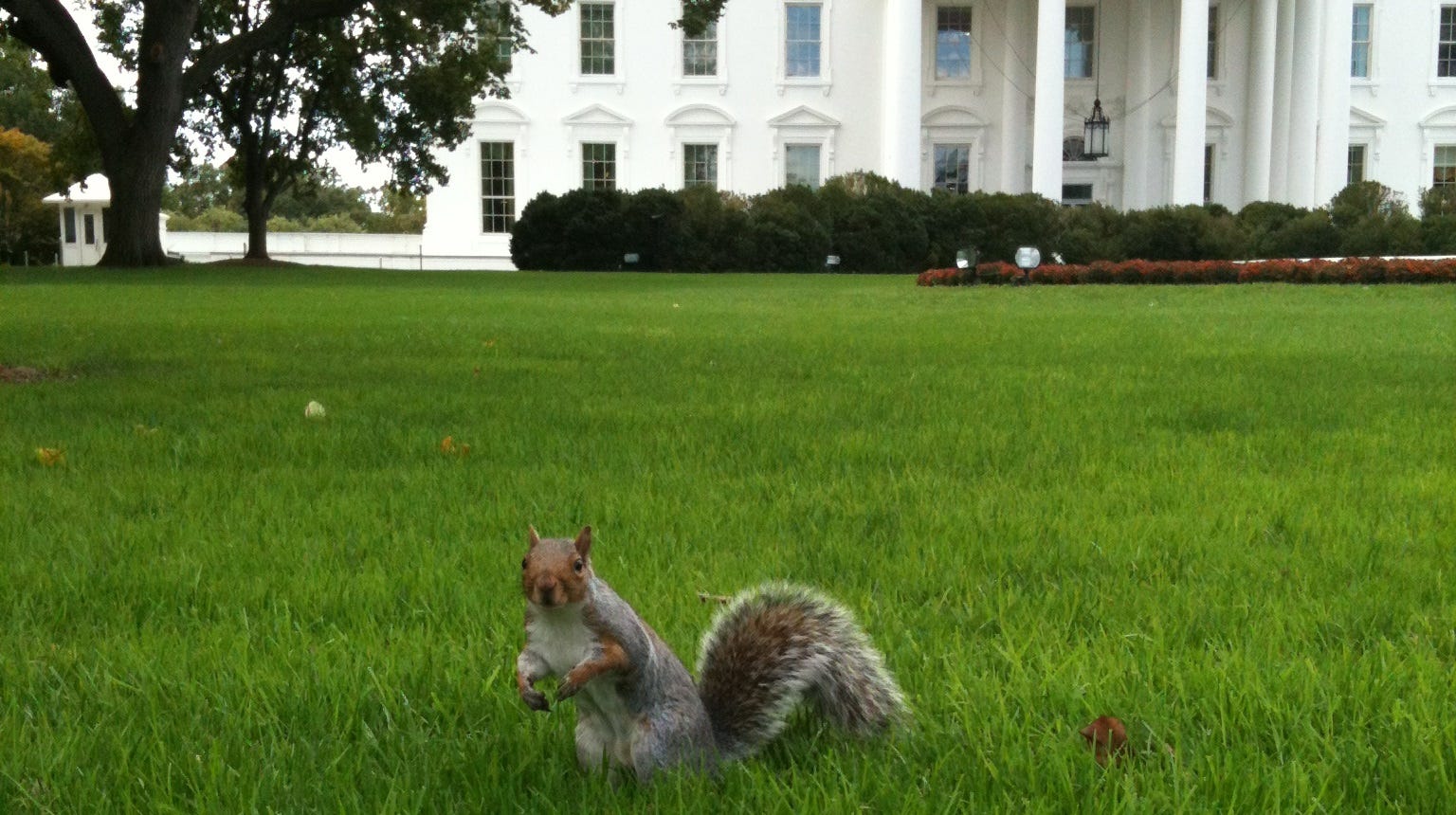
Social media were meant to advance the personal over the distant, but instead they made the distant personal. Receiving distant news through personal networks of attitudes, people became exceedingly agitated over events that normally had nothing to do with their lives.
Engagement on social media reached its maximum, its full potential, its most extreme forms, by the end of the 2010s. It led to rage and animosity, polarization, censorship, and the split of the most dynamic political network, Twitter, into X and Bluesky.
People got tired of polarization and rage, afraid of cancellation, bullying, and trolls, and just reluctant to expose themselves too much. It no longer brought moral or psychological benefits, except to the narrow circle of public figures, professional “social media personalities,” and trolls.
***
Slightly before that, a similar process started in legacy media. In 2024, news avoidance reached a historical high—39% globally, up from 29% in 2017. In the US, the figure was even higher—43%, with similar rates in Britain (46%) and Canada (40%).[2]
News avoidance in legacy media was the reversal of the Trump Bump, a surge in readership related to Trump and conservative ressentiment in the mid-2010s. The Trump Bump was the last gasp of traditional media, the peak of postjournalism.

The coverage of conservative ressentiment and then COVID gave the media their last boost of attention from progressives but ultimately discredited them in the eyes of the rest of the public. Postjournalism reached its extremes and reversed the residual trust in the media into enormous, historically unprecedented distrust.
In 2025 The Digital Reversal, I described how news avoidance would extend into a similar trend on social media—engagement avoidance. Here is a brief excerpt from The Digital Reversal, to see how the prognosis has played out.

***
…The trend toward news avoidance extends to a decline in social media engagement. In 2025, every major platform experienced a drop in engagement rates. Facebook saw a 36% decrease, Instagram 16%, TikTok 34%, and X (formerly Twitter) suffered the largest drop at 48%.
It started with self-censorship: users withheld contrarian views, fearing cancel culture. This mood seems to be growing, as political tension and state control over the internet increase—even in democracies. Not only in Russia but also in the UK, people can be arrested for posts.
Users try to engage less, avoiding comments, reposts, even likes. Many have learned that algorithms track their every click for targeting—or worse, for policing and reporting. Amid political instability and psychological hazards, more now choose to abstain from all but scrolling.
***
Under the pressure of content overload, emotional fatigue and frustration, political risks, intrusive commercial pushiness, and now the growing flood of AI junk, patterns of social media behavior are shifting. People are turning more to private forms of engagement.
The logic of the Laws of Media is inexorable. The media economy rewarded intensities, offering people low-cost expression, thus increasing noise and agitation. Reaching its extremes, engagement reversed into enragement, and now enragement is reversing into avoidance.
The Global Village splinters into kitchen-table talks. The Global Theater empties, leaving ostentation to activists, “info warriors,” eccentrics, life coaches, and “social-media personalities.” Social networks shatter into whisper networks hiding in group chats and messengers.
On a larger scale, this is happening to everything “global” in politics and culture. Globalization is reversing into balkanization, with fragmentation spreading across political and cultural structures, social strata and generations, geopolitical domains and digital platforms.
Globalization appeared to be an effect of electronic media—telegraph, radio, TV—when audiences were passive. The emancipation of authorship unexpectedly ended globalization. Digital media continue to connect people globally, but increasingly through antagonism.
Global balkanization still represents some sort of Jaspersian unity of humankind—but along odd identarian lines that may or may not reflect national or cultural structures. Digital tribes draw their own borders. Digital anthropology becomes the anthropology of niches.
The reversal of engagement—through enragement—into avoidance might come as a relief to some: with engagement in decline, enragement and polarization will disappear! Not so fast. Avoidance won’t defuse polarization but rather amplify it.
Avoidance drives reasonable and moderate people into hiding, leaving the public sphere to radicals. Accordingly, those prone to agitation become more visible, taking center stage—with no one else on it.
The reversal of engagement into avoidance does not restore “normalcy”—it marginalizes the middle. Reversals never lead “back to normal” because extremity is their driving force.
Read more about this and other digital reversals in:

See other books by Andrey Mir:
NEW! The Technological Imperative: Why We Develop Our Media. Essays on Human Agency and AI (2026)
The Viral Inquisitor and other essays on postjournalism and media ecology (2024)
Digital Future in the Rearview Mirror: Jaspers’ Axial Age and Logan’s Alphabet Effect (2024)

[1] https://briandoddonleadership.com/2011/05/22/is-a-squirrel-dying-in-your-front-yard-more-important-than-people-dying-in-africa/ or https://www.forbes.com/sites/zarastone/2016/10/10/11-times-mark-zuckerberg-kept-it-real/?sh=66348e7f35d4
[2] 2024 Digital News Report, Reuter Institute.