
The Digital Rush of the 2010s: Discourse reversal
The Digital Rush was a cultural shift in the early 2010s when traditional institutions rushed to adopt digital technologies

The Digital Rush was a cultural shift in the early 2010s when traditional institutions rushed to adopt digital technologies. They targeted the leading digital demographics at the time—early digital users: young, urban, educated, and progressive—and embraced their values. Read more in: The Digital Reversal. Thread-saga of Media Evolution.

The dynamic wasn’t unique: any medium empowers early adopters and imposes their values on society. Ancient horse riders introduced individual valor and military aristocracy to agrarian civilizations. In the Bronze Age, those with iron technology wielded power over all others.
Similarly, those who first harnessed digital media gained cultural power. Initially, the self-informing blogosphere undermined the mainstream agenda of the old establishment, fueling the public’s revolt. Then, old institutions themselves moved to digital—to adapt and adopt.
The young and progressive tech pioneers provided the hardware for societal changes, while the young and progressive discursive elites, among the first to digitize, introduced their cultural software into societal practices—from politics and education to media and corporations.
Just as the first European settlers of America imparted their religious and moral design to American culture for centuries to come, the first digital settlers defined the design of digital society and established the norms of political, corporate, and mass culture in the 2010s.
***
Among old institutions, the news media invested in the Digital Rush the most. After losing ad revenue, they needed a new business model. Moving to digital was an obvious solution. But competing with platform advertising was impossible, so the media bet on digital subscriptions.
The media began wooing digital audiences, mostly progressive at the time, and aligned with their values. It wasn’t hard, as most journalists themselves were urban, educated, and progressive. Before, ad money would keep their liberal bias in check, but that was no longer the case.
The Digital Rush, along with dire business needs, led the media to two key reversals. First, they flipped from neutral coverage to progressivism. Second, they flipped from covering news for a broader audience to focusing on topics promoted by activists.
The picture of the world in the media reversed from glory to shame. The values and grievances dear to progressives were imposed on the rest of the population.
Even the language of media changed drastically. Quantitative studies showed that the words associated with woke ideology skyrocketed in media coverage in the early 2010s – precisely when the media were forced to go digital after the reversal in the business model.
Frequency counts factor analysis of 40 words* denoting prejudice in 47 popular news media outlets
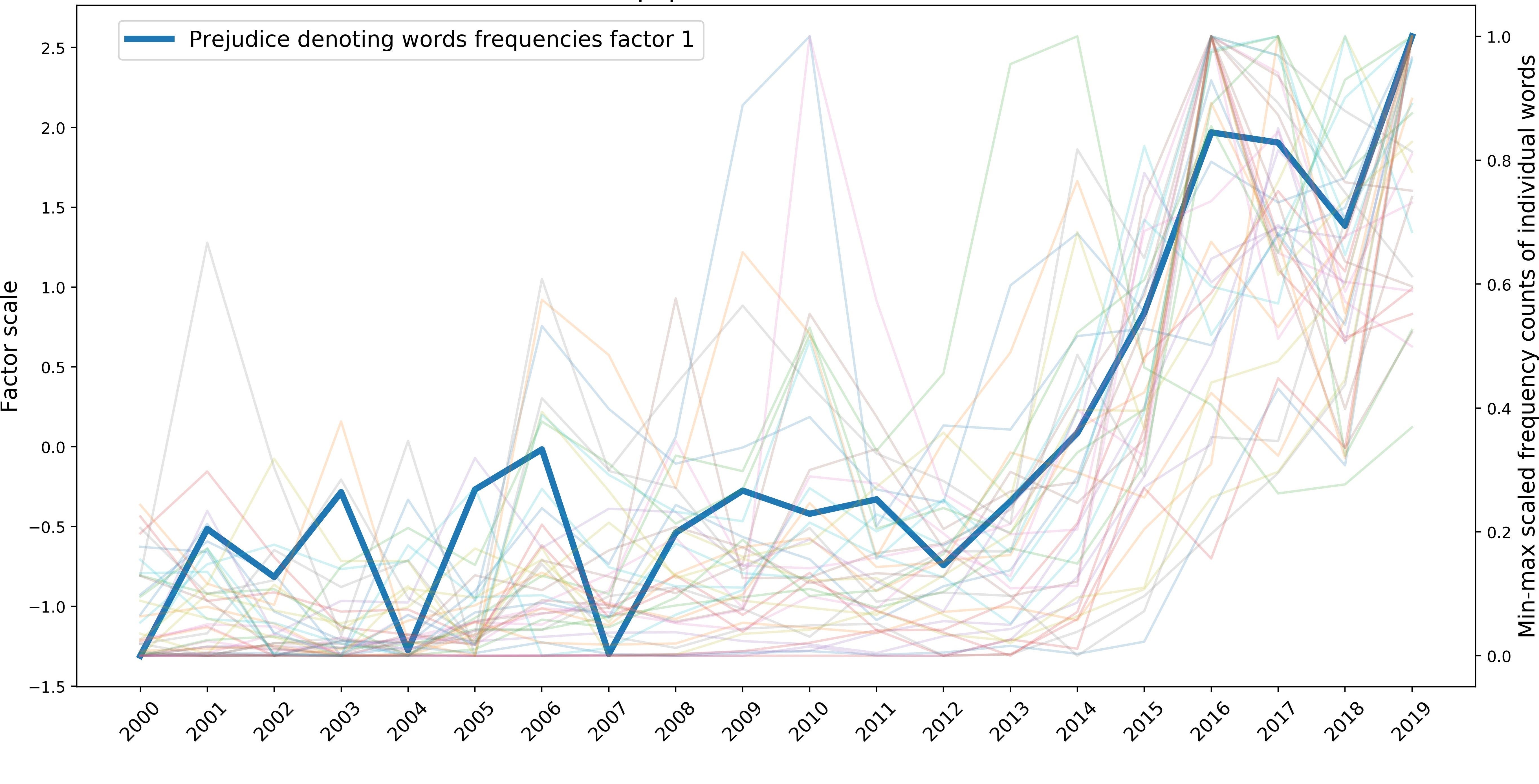
*racism, racist, racists, xenophobia, white supremacy, sexism, sexist, misogyny, patriarchy, gender discrimination, homophobia, homophobic, anti-gay, transphobia, transphobic, islamophobia, islamophobic, anti-semitism, anti-semitic, bigotry, white nationalism, white supremacist, kkk, xenophobic, slavery, sexist, misogynistic, anti-feminist, misogynists, gender inequality, homophobe, homophobes, heteronormative, transphobe, transphobes, islamophobe, islamophobes, anti-semite, anti-semites, bigots. Source: Rozado, David. (2021.)[i]
It happened fast between 2010 and 2016 and was a media effect: the loss of advertising and the focus on the digital audience resulted in a shift in the news media from representing the broader populace to representing its digitized and most progressive part.

This reversal in news coverage reflected and spearheaded the large-scale ideological reversal in dominant narratives. Mainstream media provided guidelines and language to all institutions—especially academia, corporations, and government—that joined the Digital Rush.
***
Another reversal: submitting to new values, society propelled its source, digital progressives, from activist marginalia to ruling elites. The disruptive, often nihilistic aptitude typical of progressive youth, usually marginal to the establishment, infiltrated the establishment.
Reversals kept coming. An odd alliance between bureaucracy and progressives emerged. Academia and artists, usually critical of corporations and authorities, became champions of the regime once it incorporated them. Former rebels even reversed at times into enforcers of obedience.
Starting with the media business trying to commodify moral stances, moral entrepreneurship spread into other areas of discourse production. Value statements became a requirement for academic and government grants—even in science.
Securing ideological compliance with new value imperatives, capitalism bribed its former critics with academic and activist grants, consulting and training contracts, and HR jobs. NGOs turned to government funding. The industries of DEI and censorship emerged.
The alliance of progressives, the media, and academia with bureaucracy disrupted the previous system of checks and balances. Bureaucracy plunged into unchecked growth and unchecked spending, justified by noble goals but also funneling money to itself and its new allies.
One of the most peculiar reversals: ideological allegiance to contrarian views became the defining factor of social status and material well-being in the socio-economic system to which those views were contrarian.
The West represented the strongest alphabetic literacy, both a source of digital inventions and subject to the strongest digital reversals. This may explain why the West became the only society that generously subsidized contrarians who claimed they wanted to dismantle it.

***
The cascade of reversals triggered by the Digital Rush reshaped politics. The dominance of progressive ideology left the majority underrepresented, fueling backlash. This backlash turned into a political demand when older and less progressive demographics joined social media.
On social media, they revealed how many of them felt cast out of the mainstream agenda. Alternative media sources emerged to accumulate and monetize their anger. By the mid-2010s, conservative resentment became politicized, leading to Trump and the rise of the right.
The Digital Rush shattered traditional liberal parties. Like other institutions, they absorbed progressive values and activists. Moderates couldn’t survive competition with radicals. Liberals veered far left; in response, conservatives, channeling backlash, shifted far right.
Perhaps the oddest outcome of the Digital Rush was the reversal of disruption into maintaining the status quo. The cultural forces usually aimed at disrupting institutions found themselves inside them, now making disruption the defining feature of the status quo.
After the Digital Rush, the political tranquility of the 1990s reversed into agitation and polarization. The Digital Rush of the early 2010s empowered progressivism, which rapidly reached its extreme by the end of the 2010s, setting the stage for a new, reactionary reversal.
As historical time accelerates, the reactionary backlash can rapidly approach its extreme forms, creating conditions for new reversals to their opposites. In terms of media ecology, reversals can cascade and compound; in politics, this makes the opposites dominate
Read more in: The Digital Reversal. Thread-saga of Media Evolution.
See other books by Andrey Mir:
The Viral Inquisitor and other essays on postjournalism and media ecology (2024)
Digital Future in the Rearview Mirror: Jaspers’ Axial Age and Logan’s Alphabet Effect (2024)

[i] Rozado, David. (2021) “Prevalence of Prejudice-Denoting Words in News Media Discourse,” a summary of: Rozado, David, Al-Gharbi, Musa, and Halberstadt, Jamin. (2021). “Prevalence of Prejudice-Denoting Words in News Media Discourse: A Chronological Analysis.” Social Science Computer Review, 41(1), 99-122.