
Celebrating the re-launch of McLuhan’s Coach House in the 21st Century (October, 2015)
Marshall McLuhan, Pierre Trudeau, and John Lennon with Yoko Ono at the Coach House

A report from the past, when the McLuhan community in Toronto had a blast: in October 2015, McLuhan’s Coach House was reopened and hosted McLuhan activities for a couple of years.
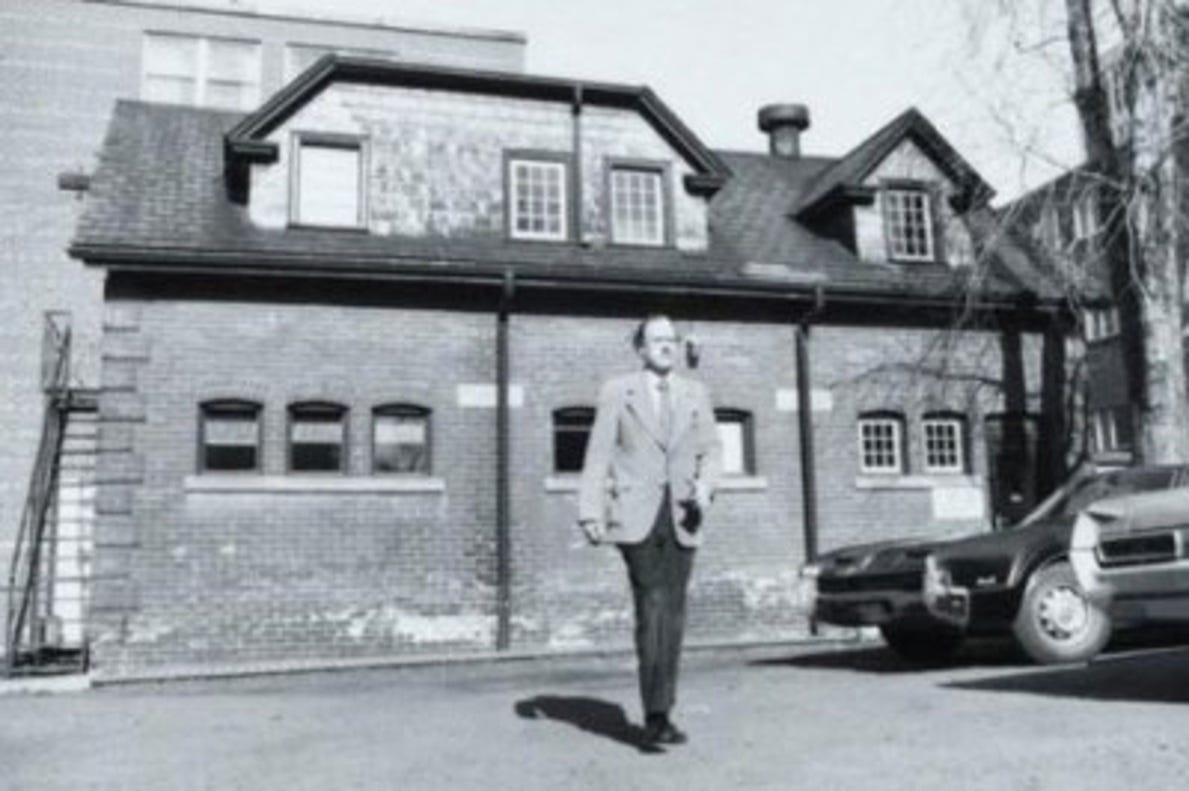
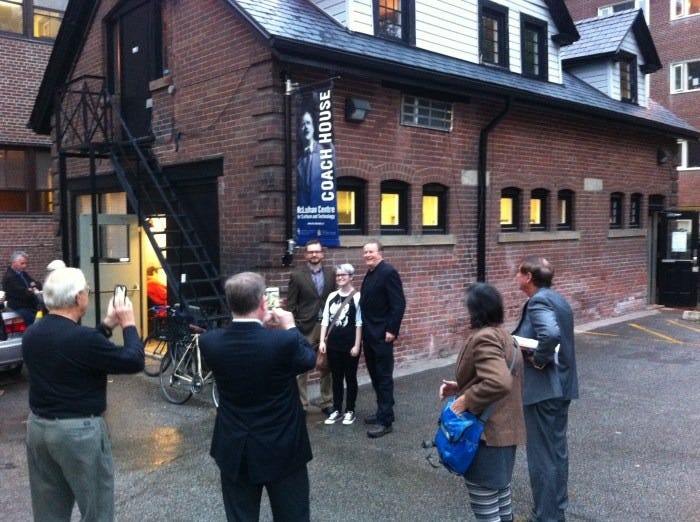
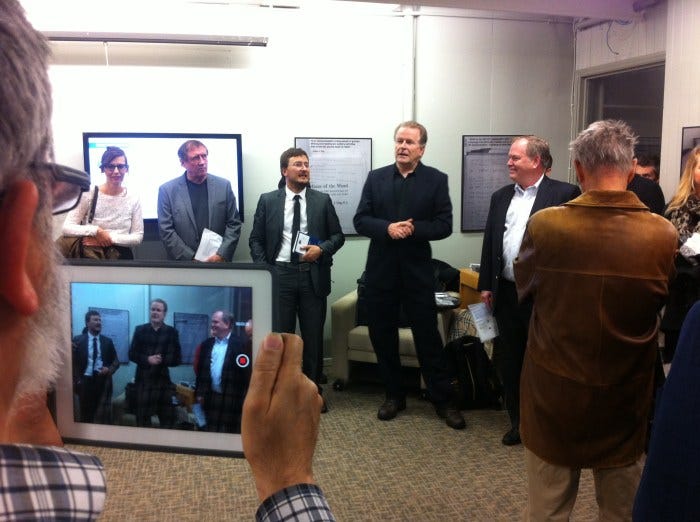
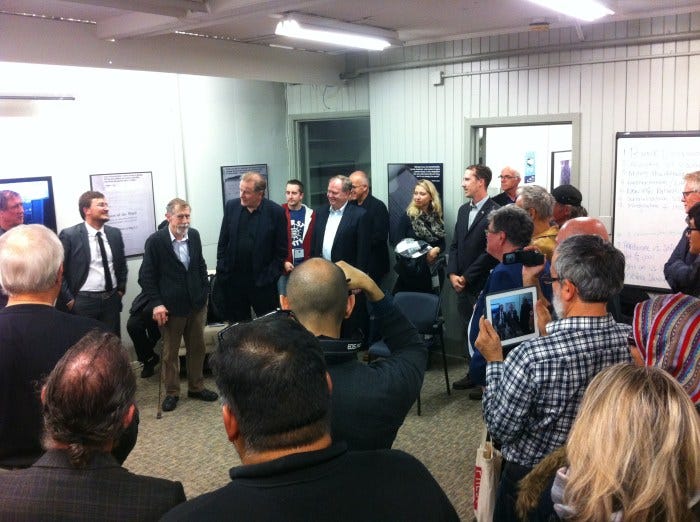
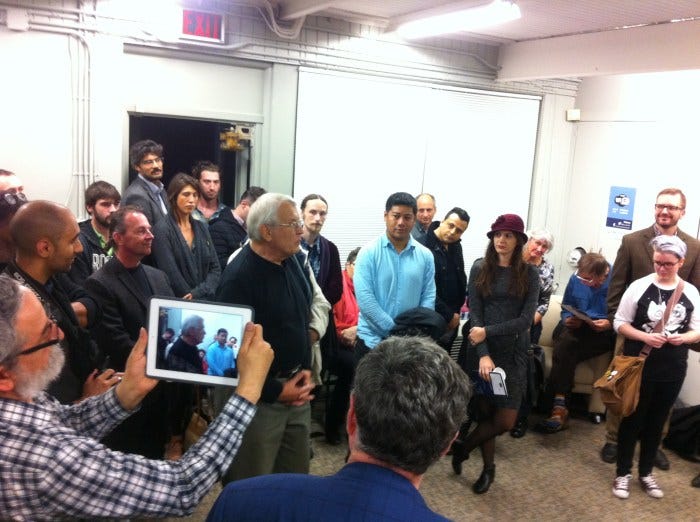
For media ecologists, the Coach House has always been a place of force. On October 21, 2015, the McLuhans and McLuhanists gathered at the Coach House at the University of Toronto to re-establish the McLuhan Centre for Culture and Technology for the 21st century.
The name “Centre for Culture and Technology” was initially just “a card pinned to the door of Marshall McLuhan’s office in the English Department” back in 1963. Here is a brief story of the Centre for Culture and Technology, better known as the Coach House:
In the early 1950s, McLuhan began the Communication and Culture seminars, funded by the Ford Foundation, at the University of Toronto. As his reputation grew, he received a growing number of offers from other universities and, to keep him, the university created the Centre for Culture and Technology in 1963… McLuhan remained at the University of Toronto through 1979, spending much of this time as head of his Centre for Culture and Technology…
It then had no organized program for research or teaching, but gained in prestige from the world-wide popularity of Understanding Media (1964) and grew in McLuhan’s last decade in Toronto, assisted by Derrick de Kerckhove and McLuhan’s son Eric, who became a director of the McLuhan Program International. In 1994, the McLuhan Program became a part of the University of Toronto’s Faculty of Information. The program’s curriculum is based on the works of Marshall McLuhan and other media theorists. In 2009, the Faculty of Information launched the Coach House Institute (CHI) as a clearly defined research unit under which the McLuhan Program in Culture and Technology now operates.
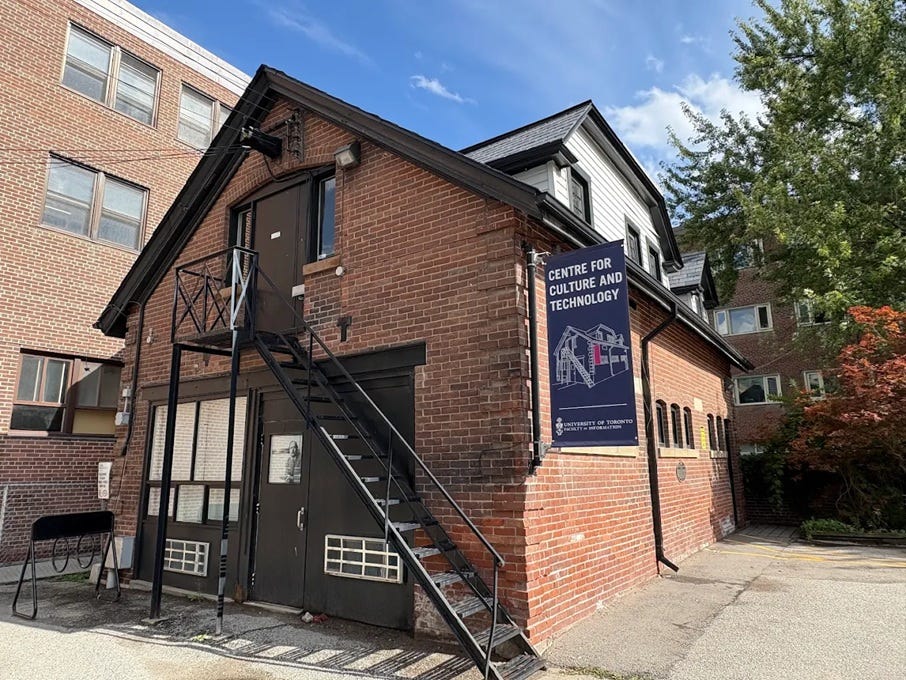
This October, the Coach House reclaimed its historical title: the Centre for Culture and Technology (not just “The McLuhan Program”). Now the Coach House has a new sign:
Michael McLuhan told stories about this place, mentioning famous people who visited the Coach House. Among them were, for example, John Lennon and Yoko Ono: McLuhan interviewed them during their “War Is Over” billboard campaign in 1969 for Canadian television. “They sat right at that spot, where the gentleman in red is standing, and talked to Marshall McLuhan about peace,” said Michael.
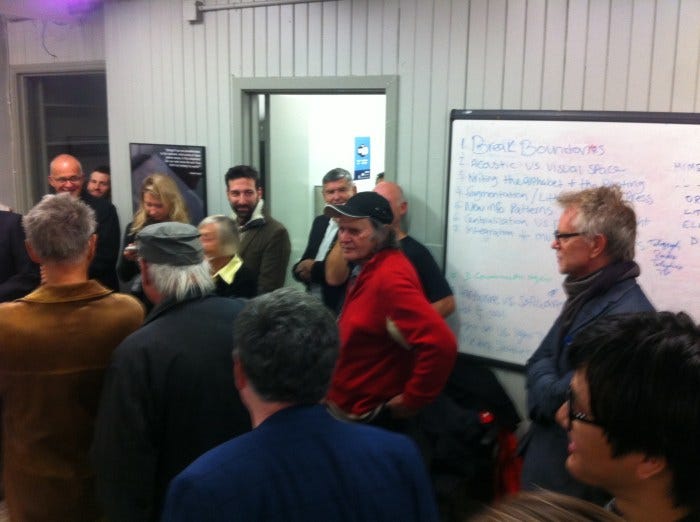
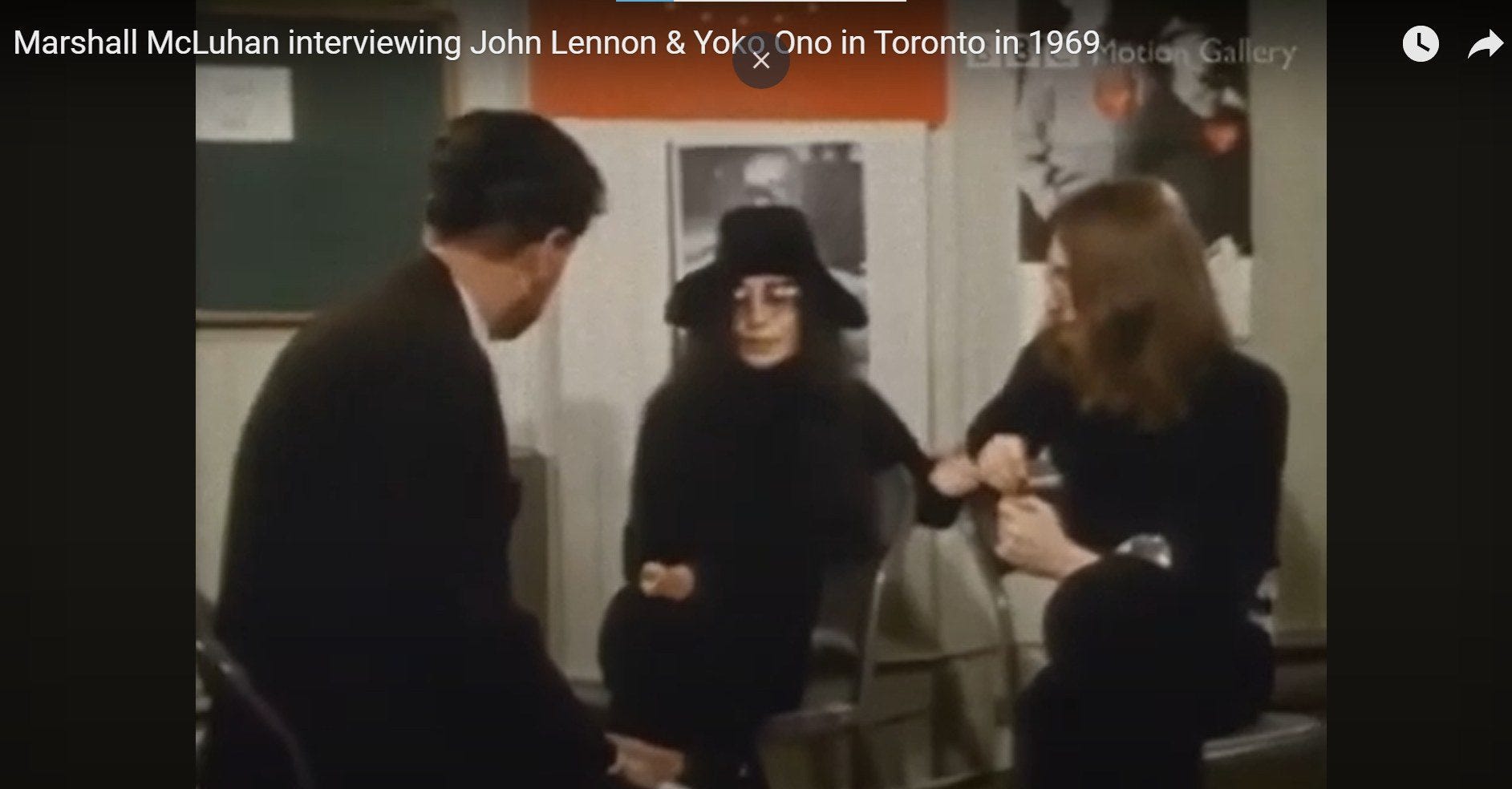
This was a remarkable interview, in which John Lenon nearly wrote a new song with the lyrics by Marshall McLuhan’s daughter, Stephanie.

This door remembers many historical figures, including Pierre Trudeau, the Prime Minister of Canada at the time and father of the newly elected Justin Trudeau.
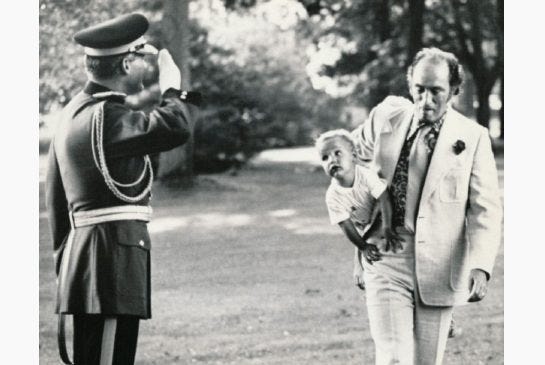
Just as Canada was celebrating the Liberals’ victory and welcoming the new Prime Minister, Justin Trudeau, Robert Logan told a story about McLuhan and Trudeau Sr., who was Prime Minister in the late 1970s. McLuhan had invited the Prime Minister to one of his Monday night seminars at the Coach House. He was supposed to arrive with Trudeau and had asked Bob Logan to lead the seminar. McLuhan wanted to surprise the participants by walking in with such a prominent guest. But he himself was surprised when the Prime Minister entered the room, looked at Logan, and said, “Hi Bob, how are you?” As it turned out, they knew each other, because Bob Logan was one of his advisers.
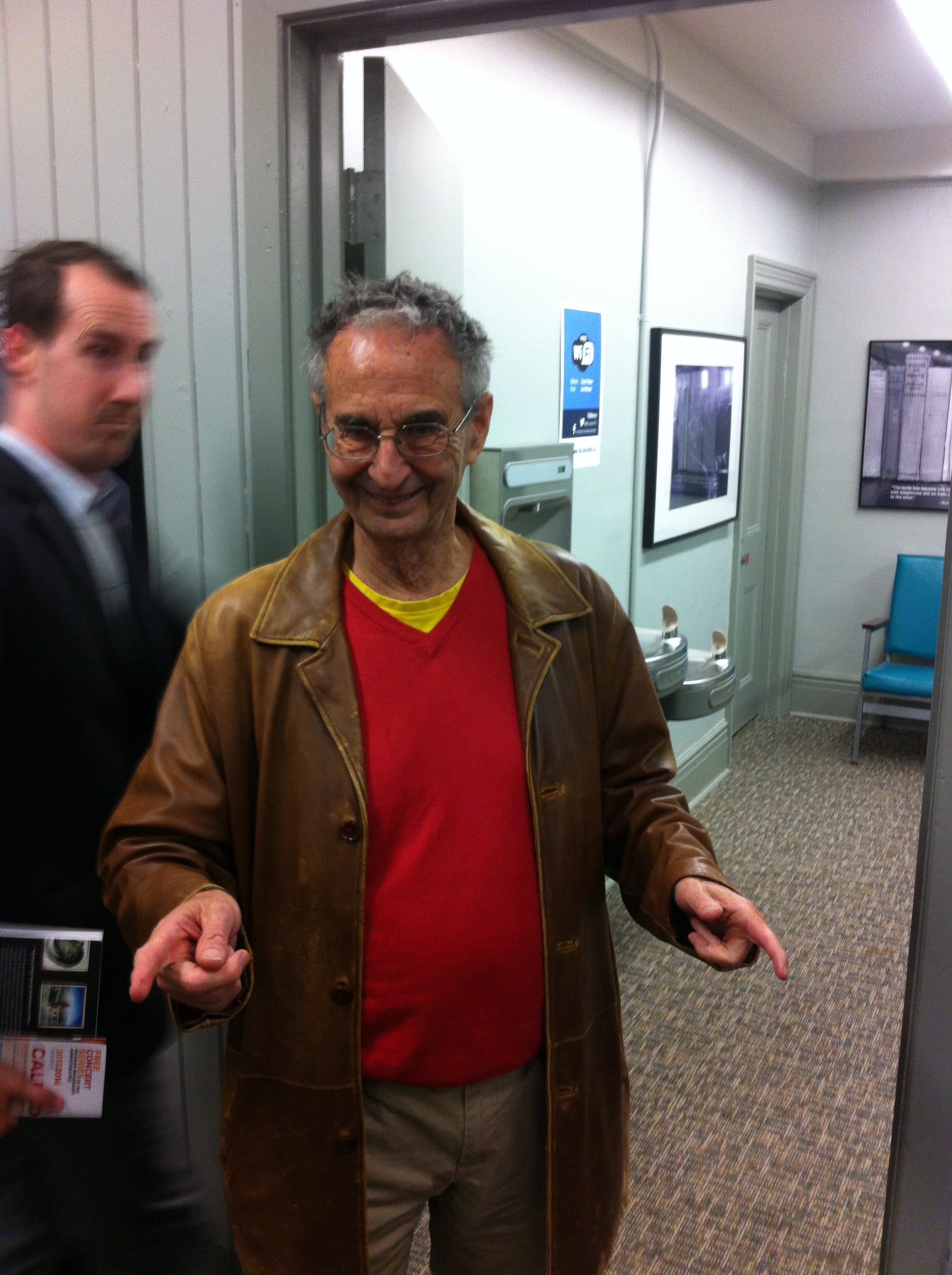
Here is how Robert Logan retells the story in his recent book, McLuhan Misunderstood: Setting the Record Straight.
“Let me relay one example in which he wanted to play a trick on his students. One day not long after I began working with him, Marshall asked me to host his weekly Monday-night seminar. He told me he was having dinner with Prime Minister Trudeau and he wanted to bring the PM to the seminar and surprise the group, so I was to say nothing about this. I kept my word. When I heard the motorcycles accompanying the PM approach the coach house where we held our seminar, I, and I alone in that room, knew what was about to happen. McLuhan strode into the room and exclaimed, ‘Ladies and gentlemen, the Prime Minister of Canada.’ Mr. Trudeau came into the room looked around to greet everyone, spotted me, and said, “Bob, hi! How are you?” Marshall’s jaw dropped, for he did not know that I was one of Trudeau’s policy advisors; I had never gotten around to telling him about my work in politics. He enjoyed the trick he played on the seminar group, and I enjoyed the one I played on him.” (Logan, Robert K. 2013. McLuhan Misunderstood: Setting the Record Straight)
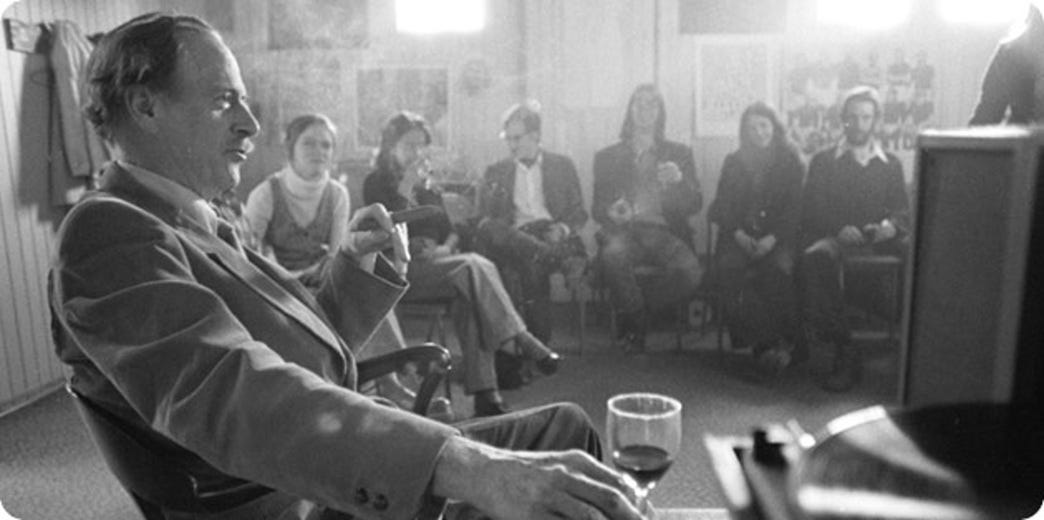
Eric McLuhan recalled his father being asked, in this room, “How to study media?” “Study language,” was Marshall’s answer.
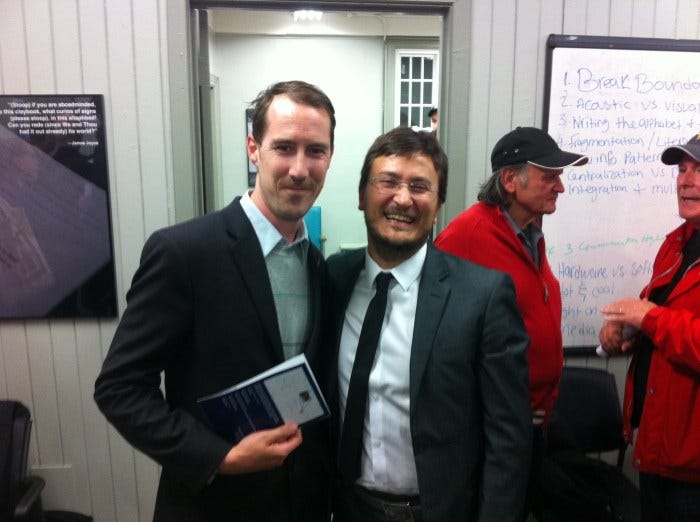
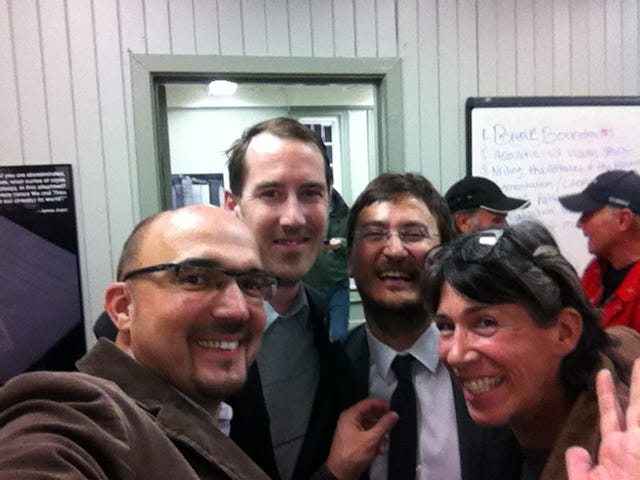
And here we are taking a selfie, numbed in McLuhan’s “zombie trance of Narcissus narcosis”… though still enjoyable, at least for me.
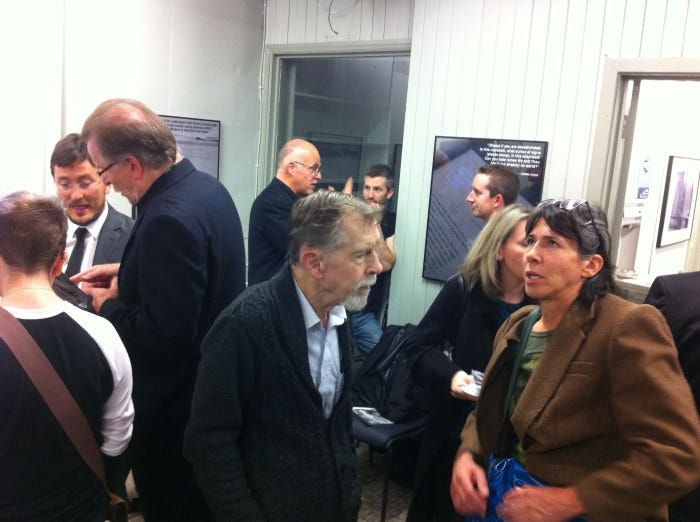
By the way, Eric McLuhan is launching his latest book, The Sensus Communis, Synesthesia and the Soul: An Odyssey, at the McLuhan Centre for Culture and Technology this Friday, November 6.
On my way back home, miles away from Toronto, later that night, I met Eric and Andrew McLuhan once again and had another 15 minutes of memorable conversation.
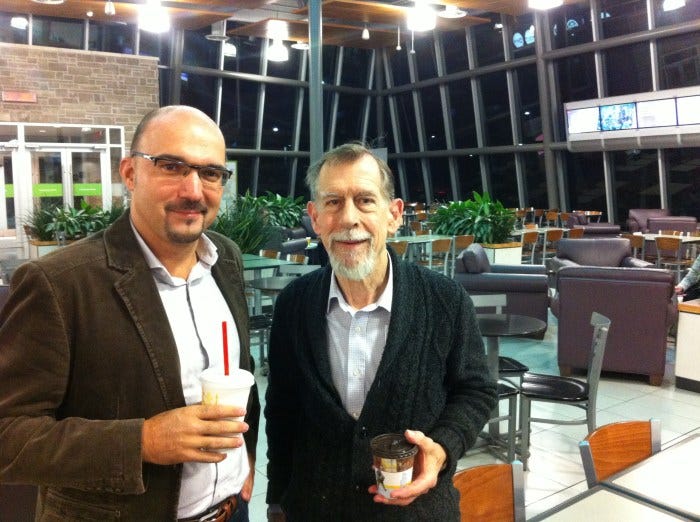
P.S. This was an archive story, a report from Marshall McLuhan’s Coach House relaunch in Toronto on October 21, 2015.
P.P.S. Eleven years later, the Coach House is still here, but the only reminder of McLuhan is a plaque by the entrance.
See other books by Andrey Mir:
NEW! The Technological Imperative: Why We Develop Our Media. Essays on Human Agency and AI (2026)
The Viral Inquisitor and other essays on postjournalism and media ecology (2024)
Digital Future in the Rearview Mirror: Jaspers’ Axial Age and Logan’s Alphabet Effect (2024)

This was beautifully done.